


How a Name Becomes a Seal
A hanko begins long before the first cut. It begins with a name — yours — and a conversation about what that name should carry.
This is the path every seal takes in our atelier, whether you sit across the table from us in Kamakura or send your name from the other side of the world.
1. Kamakura — Where the Seal Is Made
For more than eight centuries, Kamakura has been a city of temples, shrines and Zen practice. Our family has carved seals here Since 1898.
The temples and shrines of Kamakura entrust us with their goshuin — the sacred seals that pilgrims and travelers collect in their books. If you have gathered goshuin in Kamakura, you may already hold our work.
The engraver behind these seals also practices as a Zen priest. The same stillness that shapes a temple seal shapes yours.

2. Choosing Your Name
Your name can be written in kanji, katakana or the Roman alphabet. Most of our guests choose kanji or katakana.
Katakana follows the sound of your name. It is also accepted for an official registered seal (jitsuin) in Japan — a quiet advantage if Japan may one day become home.
Kanji carries meaning. We choose the characters with you, one by one, until the sound of your name and the meaning you want to hold become the same thing.
This is not translation. It is the part of our work guests remember most.

3. Material and Case
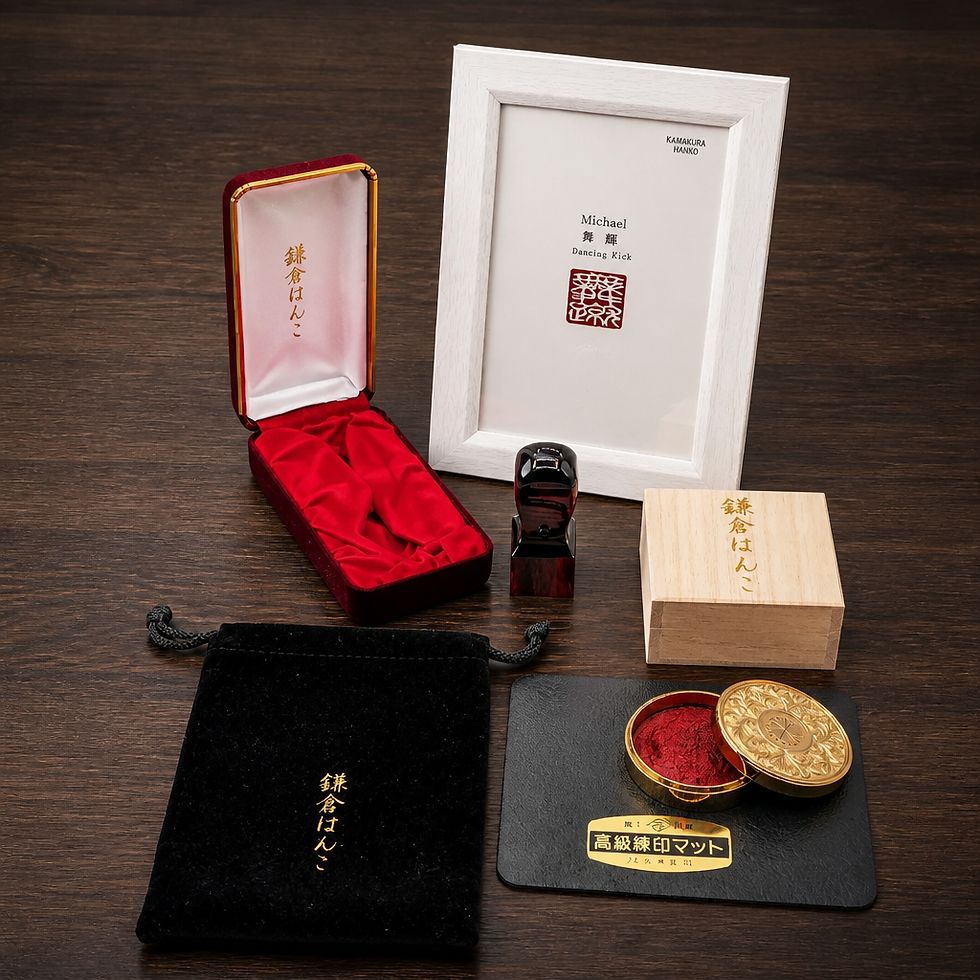
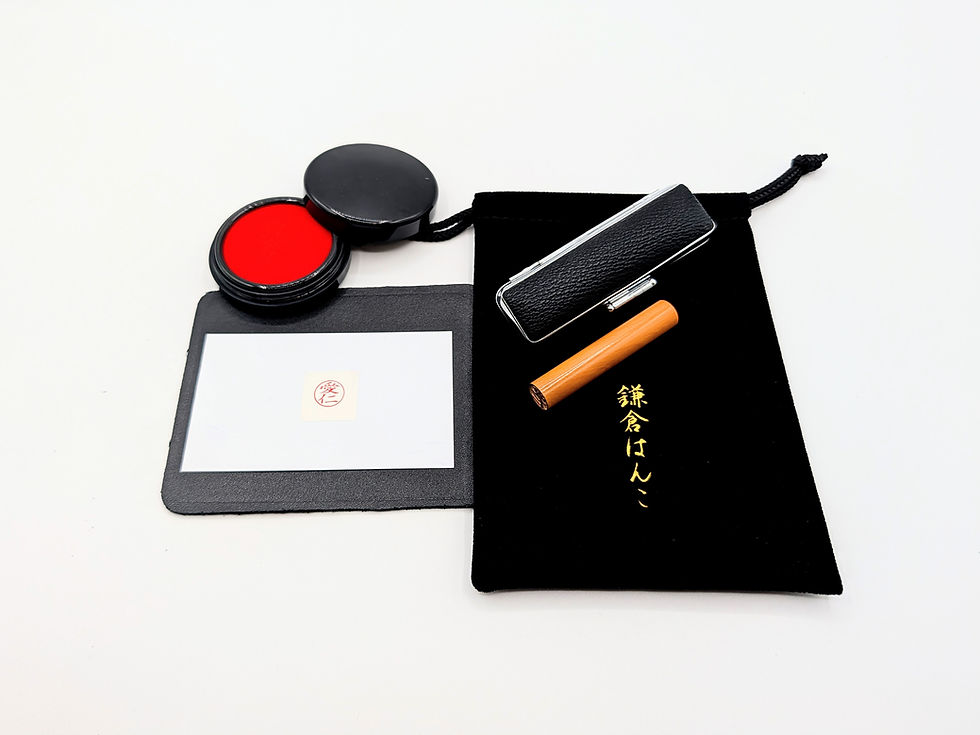
Next, you choose what your name will live in — the material of the seal and the case that holds it.
Each material has its own weight, grain and character in the hand. We will guide you toward the one that suits how you intend to use it, and for how long.

4. The Carving
This is the part no guest sees.
Our master first draws your name by hand, balancing every stroke within the circle. The design is set in our own Tsukino style, a script used only in this atelier. Then the carving begins — by a nationally certified master engraver, in the quiet of our workshop.
A seal is not rushed. It takes the time it takes. Guests who visit us spend those hours walking Kamakura — its temples, its lanes, its sea — while their name takes shape behind our doors.

5. Receiving Your Seal
The first impression you press is the moment the name becomes yours.
Our guests use their seals to sign letters and cards, mark the books they love, finish their paintings and calligraphy, or keep them simply as an heirloom to pass on.

The Artisan's Spirit
Whether you visit us in Kamakura or order from afar, every seal follows the same path — the same conversation, the same hands, the same care.

A clear and accessible first purchase



Pay securely with PayPal — encrypted checkout, buyer protection, and no card details shared with the seller.
Chosen With Confidence Carved With Care
Every seal is designed, carved, finished, and tested in our Kamakura atelier by nationally certified master engravers. Before carving begins, we confirm the design with you. Most orders ship within 14 to 21 days after design confirmation, with tracked international delivery.
I do not know Japanese. Can I still order?
Yes. Enter your name in the Roman alphabet. We will guide you through the Japanese character options and explain their meanings in English.
Should I choose Kanji or Katakana?
Choose Katakana when accurate pronunciation and natural Japanese usage matter most. Choose Kanji when you want meaning as well as sound. If you are unsure, select Master’s Choice.
Can I see the design before carving?
Yes. We send the proposed design for confirmation before hand engraving begins.
Which size should I choose for my first Hanko?
For most personal names and gifts, 15 mm round is the most versatile starting point. The ideal size can change with name length and purpose.
Are all Hanko hand-carved?
A certified First-Class Skilled Craftsman—holding the highest level of national certification—performs every step of the process, from design and rough carving to finishing and stamping.
Do you ship worldwide?
Tracked international delivery is available to most destinations. Duties and taxes, where applicable, are determined by the destination country.