

Visit by Appointment for a Custom Hanko in Kamakura
Book Your Appointment
Your consultation and selection of your hanko take approximately 30 minutes. If you choose same-day express collection, you can explore Kamakura while our artisan engraves your seal, then return at the agreed collection time.
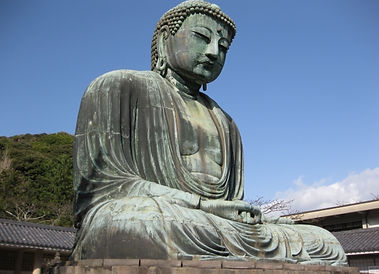
Visit by Appointment for a Custom Hanko in Kamakura
Visit KAMAKURA SIGNET to choose a personal Japanese seal crafted by an artisan. Explore materials and designs, discuss your name or logo, and find a hanko that is right for you.
Visits are by appointment only. Please book before coming to our Kamakura atelier. Our artisan can engrave only three seals per day, so advance booking is required for both consultations and orders.
Appointments are free, and you are welcome to book a consultation-only visit. There is no obligation to purchase. We welcome consultations in English, so you can discuss your name, materials and design without speaking Japanese. You may cancel your appointment if your plans change. Please let us know in advance.
Benefits of Visiting Our Atelier
Explore Historic Kamakura

Combine your visit to our atelier with sightseeing in historic Kamakura. Enjoy the city before or after your appointment.
See Design Examples in Person

View design examples with the artisan to get a clearer idea of the lettering and layout you would like for your hanko.
Meet the Artisan in Person

Meet the artisan who will create your hanko and discuss your ideas directly, from your name or logo to the design of your seal.
Discover Your Name in Japanese

Our artisan can suggest a Japanese rendering of your name in kanji or katakana. Discuss the sound of your name and, for kanji, the meanings of the characters to choose a personal expression for your seal.
See and Feel the Materials

Hold a variety of seal materials in your hands and compare their weight, colour and texture. Choose your favourite by seeing and feeling the differences in person.
Typical Budget

Plan for a total purchase budget of approximately US$150–600, depending on your seal, case and accessories. We will confirm the final price and any express-service or delivery charges before you pay.
What Happens During Your Visit
.jpg)
1 Book Your Appointment Online
Book your appointment using the form on this page before visiting our Kamakura atelier.
2 Visit Our Atelier in Kamakura
We are a 2-minute walk from Kamakura Station. Kamakura is approximately 20 minutes by train from Yokohama Station and 50 minutes from Tokyo Station. Travel times vary by service.
3 Discover Japanese Hanko Culture
Learn briefly about the history of hanko and how personal seals are used in Japanese culture.
4 Choose Your Characters and Design
Choose kanji, katakana, alphabet lettering, a decorative design or your own logo. Discuss the lettering style and layout with our artisan.
5 Choose Your Seal Material
Explore the available materials and choose the one that suits your preferences and budget.
6 Confirm Your Order and Pay
Confirm your design, selections, total price and collection or delivery arrangements before payment.
7 Have Your Hanko Engraved
Our artisan will engrave your hanko according to the design agreed during your visit.
8 Explore Kamakura and Collect Your Hanko
For an additional fee, same-day express collection may be available. While your hanko is being crafted over approximately 3–6 hours, enjoy Kamakura’s Zen temples, shrines, Great Buddha, seaside and mountains. After sightseeing, return to our atelier to pick up your completed hanko at the agreed time.
Kamakura
About 50 minutes from Tokyo Station via the JR Yokosuka Line. About 20 minutes from Yokohama Station.
Price
Total purchase budget of approximately 150 to 600 US dollars.
40 mins
The experience lasts approximately 40 minutes.
Private
Available for ages 6 and up. Maximum of 4 participants. Accompanying persons are also welcome.
same-day pickup
crafted by artisans on the day of the order. Mail delivery is also available.
English-speaking host
The artisans can communicate in English, so you can enjoy the experience with peace of mind.
Included
-
HANKO Seal(Japanese Boxwood)
-
Engraving Fee(KATAKANA)
-
catalog
-
Original Pouch for Your Hanko
Not included
-
Shipping - only if you request shipping instead of picking it up.
-
upgrade Material Fee - If you choose horn, wood or gemstone
-
Character Upgrades. Typeface upgrade
-
Red INK
1.
LEARN
Discover the history and culture of the Japanese HANKO seal.

3.
SELECT A MATERIAL
Choose from wood acrylic, or premium options such as gemstones, horn, and traditional Japanese woods (additional fee applies).

5.
CHOOSE A PICKUP TIME
You can pick up your Hanko any time in the afternoon on the day of your experience. While your Hanko is being engraved, why not explore the historic city of Kamakura? From our shop, Tsurugaoka Hachimangu Shrine, the Great Buddha of Kamakura, Zeniarai Benten Shrine, and Yuigahama Beach are all within a 10-to-30-minute walk.

2.
DESIGN
Choose the type of hanko you would like to make (Hiragana, Katakana, or Kanji) and choose a font. We will help you write your name in Japanese using characters that reflect your personality.
4.
CHOOSE A CASE
We have more than 100 kinds of traditional handicraft cases made by Yamanashi craftsmen.
6.
ENGRAVING THE HANKO
We engrave each Hanko on-site. The process takes approximately 30 to 180 minutes per piece.


Booking deadline
Booking must be made at least 4 hours before the experience.
Cancellation policy
Our cancellation policy allows for a full refund if you cancel your booking 1day.
Guest requirements
Minors under 18 years of age must be accompanied by an adult guardian over 18 years of age.
A Specialty Maker of Personal Seals with Heritage Technique
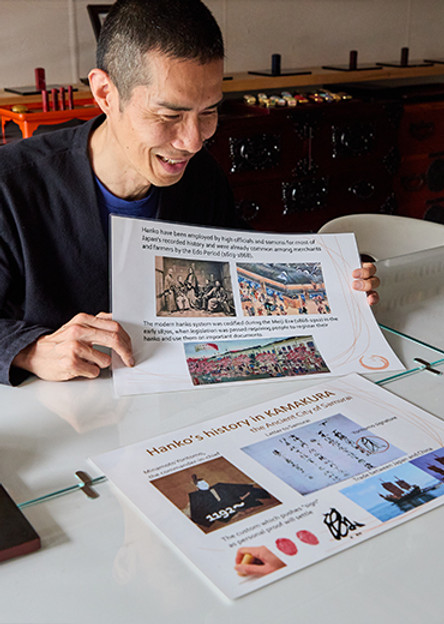
Kamakura Hanko has been hand making high quality artisanal personal seals for 70 years. Mitsuhiro Tsukino is its third generation proprietor, and he along with his wife Chieko are both nationally certified seal engravers. Together, they handle everything from orders to design to engraving by hand.
Mass-produced machine-engraved seals, rubber stamps, and self-inking stamps are in wide circulation today because of their low cost and production speed. But those who value custom-made, hand-finished, high quality seals that will last a lifetime continue to choose Kamakura Hanko.
Kamakura Hanko’s personal seals go beyond simple office tools and are valued as works of art. The stamp surface is hand-designed and created with the mikkoku technique. These beautiful, elegant designs are extremely popular with temples and shrines around Japan, who have commissioned Kamakura Hanko to produce their goshuin seals used to commemorate pilgrimages and religious attendance.
Kamakura Hanko’s seals have been recognized for their excellence of technique, traditional production methods, and artistry. In 2022 they won the highest level award from NOA (Nippon Omiyage Award). This experience offers a chance to visit the workshop of proprietor Tsukino, one of Japan’s leading artisans of hanko seal making, to consult directly with him on the art and your design.

Japan’s Personal Seal Culture: a Thousand-year Tradition
A walk from Kamakura Station down through the Onari-dori shopping street plunges visitors into a rustic atmosphere, and it is here that one can find the Kamakura Hanko shop front – and through it discover an eye-catching interior filled with fine wood, precious stones, gorgeous colorful cases, and traditional tools.
The Tsukinos have their workshop in the back of the store, and you just might be able to see them working. Mild-mannered and friendly, their day-to-day clientele includes foreign customers and they are accustomed to fielding questions in English, ensuring visitors can feel at ease to ask about anything they don’t understand.
The experience begins with a brief talk from Tsukino about Japan’s tradition of using personal seals. Learn all about this tradition, the role of the city of Kamakura in its history, and the importance of these literal markers of identity used by each and every Japanese person.
“For Japanese people, personal seals are more than just a substitute for a signature or a marker of assent,” says Tsukino. “They’re a partner who is present for major life decisions and who helps make them.” Personal seals continue to be valued even in this era of ever-increasing digitization of payments and contracts, and learning to understand why will give you a deeper appreciation for the significance of having one for yourself.

The Lore of the Material: Choosing Beauty and Fortune
After the abstract, it’s time to get concrete – moving from history and value to materials, usage cases, and characteristics. You’ll also learn about the traditional spiritual meanings behind them.
Boxwood is the primary material used for Japanese personal seals, as well as for other traditional small person daily implements such as combs, valued for its high density and durability. It is said to represent “a firm and unwavering bond,” making it well suited to the personal seal.
In addition to boxwood, other options include monarch birch, cherrywood, natural black water buffalo horn, amber and Kamakura-bori wood (prices vary by material). Kamakura-bori seals are hand-carved in collaboration with skilled artisans and finished with layers of natural urushi lacquer, resulting in a warm, durable piece that grows more beautiful with age. All of Kamakura Hanko’s stamp materials are brand products from Koshu, Japan’s leading personal seal material production region. Due to being produced from natural materials, each one has its own unique look. Feel free to handle them and get a feel for their color, pattern, weight, and texture to find the one best suited to you.

Work Closely with Tsukino to Design a Personal Seal that is Perfectly You
After choosing your material, the next step is the stamp design. Tsukino walks you through the traditional typefaces used in personal seals, as well as how the three different writing systems of kanji, hiragana, and katakana are used. Tensho style calligraphy is the most traditional, and is featured on Japanese yen notes. Reisho is commonly featured in stone engravings at temples and shrines, and the brushwork-like gyosho is also popular. Get a glimpse also of the traditional practice of fortune telling through the written strokes in a name and how it factors into choosing an auspicious personal typeface.
Choose how to render your name in Japanese script on your personal seal with Tsukino’s thoughtful guidance. Typically, those with names from countries which do not use kanji are advised to use the katakana script, which can be registered officially as a personal seal in Japan. Those with names already in kanji can also opt to use kanji, or opt for the Ateji method, where characters are carefully selected to phonetically match the name while conveying positive, auspicious meanings.
For those seeking the pinnacle of artistry, the Mitsukoku (Dense Engraving) service adds intricate mythological motifs around your central name, creating a one-of-a-kind masterpiece.
Seals registered with one’s local government office are used in Japan for major binding agreements, such as when purchasing a home or starting a company. (Please note that if your name is originally in katakana or another non-kanji script, a Kanji version created for artistic purposes cannot be officially registered.)

For those seeking the pinnacle of artistry, the Mitsukoku (Dense Engraving) service adds intricate mythological motifs around your central name, creating a one-of-a-kind masterpiece.
Seals registered with one’s local government office are used in Japan for major binding agreements, such as when purchasing a home or starting a company. (Please note that if your name is originally in katakana or another non-kanji script, a Kanji version created for artistic purposes cannot be officially registered.)
When the experience is over, choose a protective case for your completed seal. This plan includes your choice of a beautiful standard case with a traditional pattern. You may also opt for optional upgrades, such as Imari-yaki porcelain, prized for its durability and richly decorative patterns that turn the case itself into a collectible work of art, a case made from top-tier Nishijin kimono weave, or a premium leather option, each showcasing exquisite craftsmanship.

A Unique Personal Seal, A Lifelong Partnership
The peak of this experience is sure to be the moment you receive your finished seal – either by pick-up within 3 hours of the experience, or by mail at a later date. The jewel-like look of the seal housed within its case is already a moving sight to behold, but a closer look at its stamp end reveals an elegant and hand-designed typeface engraved with a precision simply unmatched by any machine production, with fine blade marks serving as unique and distinct telltales of human handiwork. Affixing one’s personal seal to a document is an expression of resolution and commitment in Japan, and the seal itself acts as a kind of a talisman or a second, aiding this resolve.
You can display your seal together with its craft case as a decorative art piece, or try stamping it to paper using the included ink pad for a better sense of its finish. With proper care, each piece will last for a very long time, and repeated use will gradually produce a charming aging of the colors – leaving you with a lifelong personal seal that you can cherish and use for many years to come.